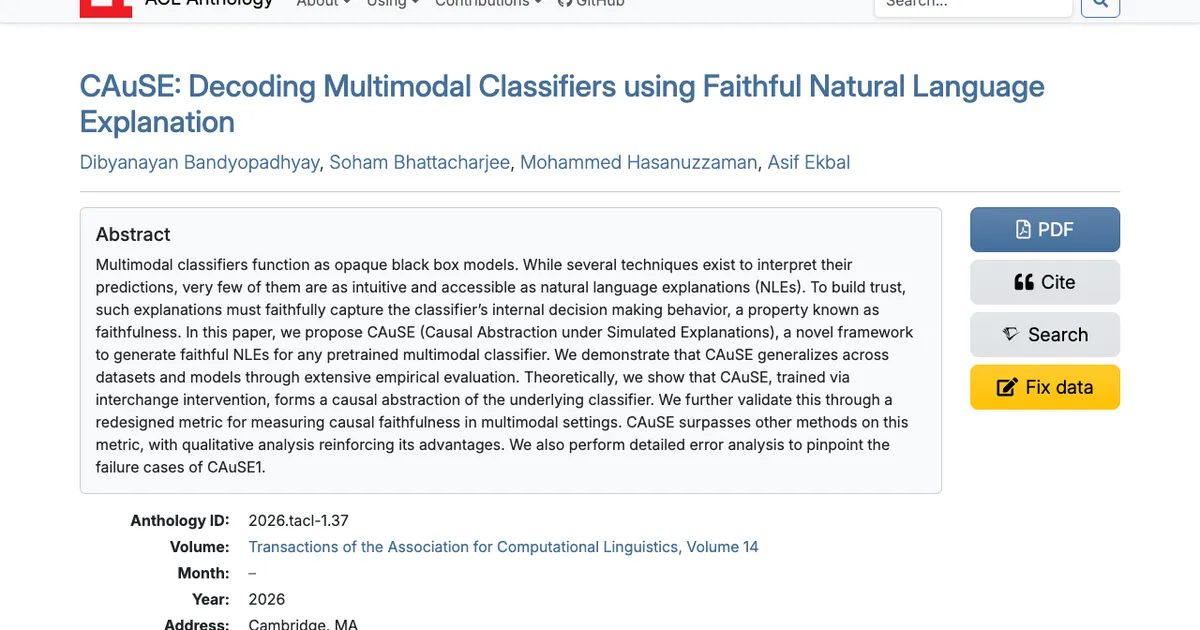
Aligned Probing: Relating Toxic Behavior and Model Internals
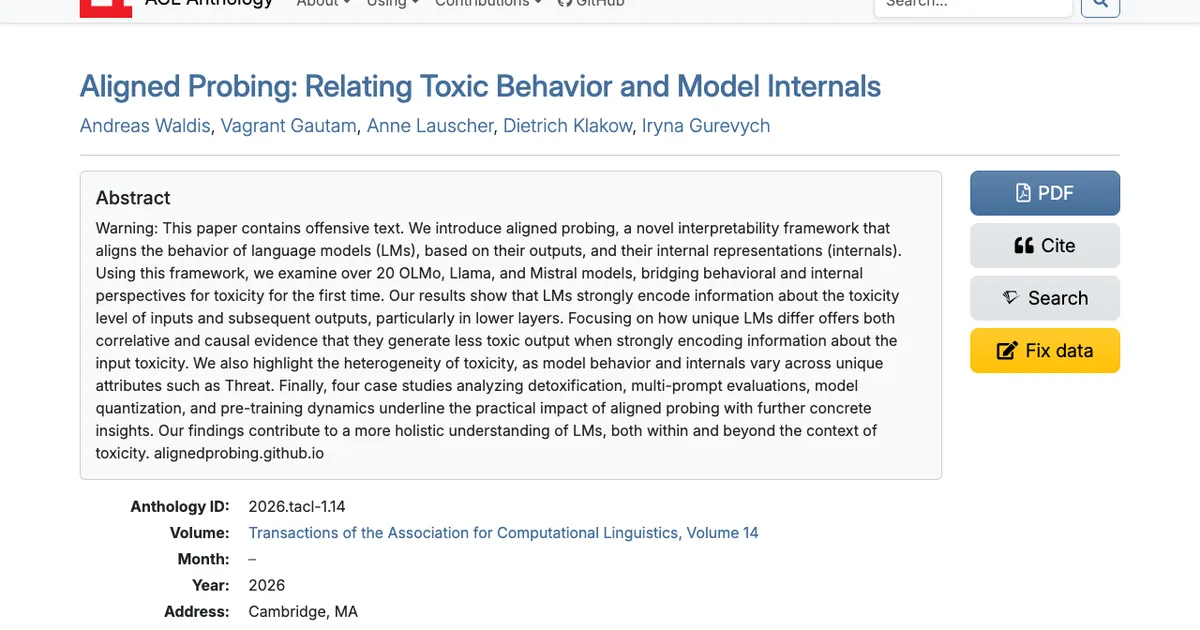
Decoding Toxicity: A Deep Dive into Language Model Internals
Hello everyone! 👋 As AI continues to permeate our lives, understanding why models behave the way they do—especially when it comes to sensitive topics like toxicity—is paramount. We just came across an incredibly insightful paper that introduces a novel approach called Aligned Probing.
This research tackles the critical challenge of model interpretability by creating a bridge between what Language Models (LMs) output (their behavior) and what they actually know deep inside their architecture (their internal representations). Why is this connection so crucial? Because simply looking at bad output doesn’t explain the root cause.
🧠 The Aligned Probing Approach
The researchers examined over 20 cutting-edge models—including OLMo, Llama, and Mistral—testing how they handle toxicity. Their key innovation was establishing a framework that aligns these two viewpoints simultaneously. By doing so, they were able to track how well the model ‘encoded’ information about the input’s toxicity level, both in its behavior and deep within its hidden layers.
📉 What Did They Find? The Toxicity Blueprint
The findings are sobering yet immensely valuable for AI safety research:
- Toxicity is Encoded Deeply: LMs strongly encode information about input toxicity across their internal structure, particularly in the lower layers. This means the model isn’t just reacting; it has internalized patterns of danger and offensiveness.
- Internal State Matters: The study provides correlative and causal evidence suggesting that models generating less toxic output tend to be those that strongly encode information about input toxicity. The internal state seems to govern the safety behavior!
- Heterogeneity is Key (Threat): Crucially, they also highlighted that